Wednesday, 13 December 2017
Hannah Witton: 'Why doesn't anyone wear condoms on TV?'
Sex vlogger Hannah Witton asks why there isn't more safe sex on TV and whether it matters. via BBC News - Health Read More Here..

Man flu 'a near-death experience'
We took to the streets of London to find out if you think 'man flu' is a real illness. via BBC News - Health Read More Here..
Shop vouchers could boost breastfeeding
A study suggests that offering shopping vouchers can increase breastfeeding among new mothers. via BBC News - Health Read More Here..
Wearing a stoma
Natalie Toper tells her story of why she wears a stoma and how it has affected her daily life. via BBC News - Health Read More Here..
Tuesday, 12 December 2017
Vigorous Exercise May Help Slow Parkinson's Disease
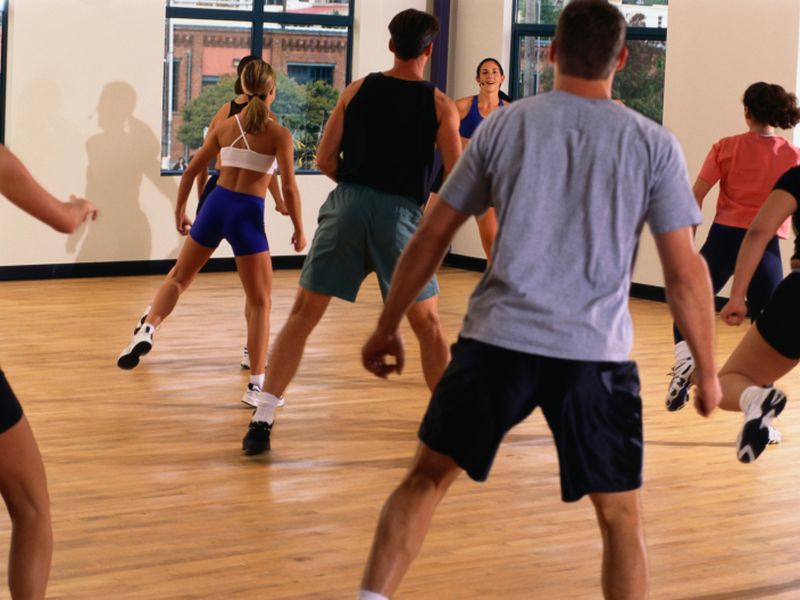
Source: HealthDay via Exercise and Physical Fitness New Links: MedlinePlus RSS Feed Read More Here..
Heat-not-burn tobacco 'is a health risk'
The new tobacco products are safer than cigarettes but not risk-free, say UK experts. via BBC News - Health Read More Here..
Trafficking of pills used by suicide bombers soars in Sahel
The UN's drugs agency warns smuggling of the opioid tramadol, used by Boko Haram, must be stopped. via BBC News - Health Read More Here..
Diabetes nightmare: A hypoglycemic attack on air
When Alex Ritson's blood sugar dropped, he was glad his team at the BBC World Service knew what to do. via BBC News - Health Read More Here..
Physical assaults on ambulance staff at five-year high
There have been 21 attacks on ambulance staff in the Western Trust area in 2017. via BBC News - Health Read More Here..
Motability car loss 'left me suicidal' says disabled man
Charlie Evans became depressed after his adapted car was taken away following benefit changes. via BBC News - Health Read More Here..
'That's where the babies are suffering'
Are pro-life supporters standing outside abortion centres harassing women? via BBC News - Health Read More Here..
Baby Max spends first year in Southampton hospital
Max Olivares has a rare heart and lung condition, which requires a complex transplant operation. via BBC News - Health Read More Here..
Bid to scrap Austria May 2018 smoking ban
Parties expected to form a coalition agree that a planned full ban in restaurants should be dropped. via BBC News - Health Read More Here..
Monday, 11 December 2017
The Dangers of American Sexual Prudishness
Is the US the world’s most uptight nation regarding sex? Maybe not the most, but certainly among them. For example, the US has more laws regulating sexual behavior than all European countries combined. US prudishness is so severe as to be deadly. To end sexual violence and harassment against women, something has to change.
Is America the World’s Most Uptight Nation When It Comes to Sex?
Less than half of girls and boys in the US have received the HPV vaccinations that can protect them from deadly cancers. Why? Because HPV is a sexually transmitted infection (STI), and discussing teen sexual activity is taboo. Many doctors refuse to recommend the vaccine because they are uncomfortable discussing STIs.
Related to this prudishness is the view that women’s bodies are purely sexual and therefore all female nudity is provocative and shameful. Even public breastfeeding makes most Americans uncomfortable because a woman’s breast is exposed.
This prudishness about women’s bodies claims to be “protecting” women. At its heart, however, it is about power rather than sex. The “protection” it provides is both seductive and insidious. Seductive, because many women find it comforting to imagine that men are protecting them from danger, even strangers such as legislators—insidious in its implications.
Whom do we protect? Children and adults who are too young, inexperienced, weak, or incompetent to protect themselves. Putting a normal adult woman into this category disempowers her, ensuring that someone else can dictate the most intimate conditions of her life: how she dresses, where she can go alone, whether she has final authority over her own body.
Prudishness also justifies a perceived division between “good” and “bad” women. The former are modest, compliant and “covered up.” The latter, bold, proud, and independent. That separation buttresses men’s sense that they can treat “bad” women badly. Because the women are “out there,” they can be objectified, attacked, harassed, groped. The result is evident, as the tidal wave of sexual violence and harassment reports continues to grow.
Despite broad recognition of this public health epidemic and dedicated efforts to end sexual violence and harassment, few programs have been successful. The problem is that they are fighting an uphill battle against the prevailing social mores described above. If men are inherently more powerful than women and can define “good” and “bad” women, the only way to end sexual assault and harassment is to convince men they should not assault women. Otherwise, the only option is to mitigate the impact by convincing bystanders to intervene, or training women to defend themselves.
We need a completely new approach. Let’s consider societies with two striking cultural differences from the US. These cultures hold that women are equal to men and that women, from teenhood, should have complete control over their own bodies.
Consider the Kreung society of the lovely Ratanakiri (“Mountain of Jewels”) Province in Cambodia. The Kreung believe that healthy, loving marriages require women who are strong, self-assured, and have self-confidence about their sexuality. Parents help each teen daughter achieve this state by giving her a room of her own. She can invite a boy she likes to spend the night in her room. There, she makes all the rules and reigns supreme. Will they talk the night away? Sleep? Cuddle? Have sex? She alone decides. In this completely secure space, she is free to explore her own sexuality, to discover what pleases her. When she says, “No,” he obeys instantly, without argument or bad feelings. A boy who flouts this rule faces severe penalties from the entire community, as do his parents.
Take another interesting group, the Vanatinai, a small island society off New Guinea. There, women and men are equal in all major aspects of life: decision-making, ritual practices, spiritual power, property holdings, and sexual activity. By working hard to gain goods and giving them away through ritual generosity, anyone of any sex can become one of the authoritative and influential leaders known as “gia”. Everyone is free to engage in sex before marriage, to end a marriage, and to marry as often as, and with whomever, he or she wishes.
The result? Divorce is rare in these societies; sexual violence virtually unknown.
The Takeaway
Sexual violence and harassment are rooted in the very foundations of culture. It is not enough to tell men they should not indulge, or bystanders that they should intervene, or women that they should protect themselves. Ending sexual violence and harassment requires a fundamental shift in cultural attitudes and values, beginning with equality between women and men, and women’s complete control over their own bodies. This change includes ending the putative “protection” of women—including laws to restrict abortion, to regulate women’s attire in ways that are different from those for men, or other social and legal constraints that claim to “protect” but actually disempower and diminish women. Only such basic cultural and legal changes will make it possible to end sexual violence and harassment against women.
References
Cdc.gov. (2017). Sexual Violence: Prevention Strategies. [online] Available here.
Lepowsky, M. (1993). Fruit of the motherland. New York: Columbia University Press.
Mullin, E. The Cancer Vaccine That Too Many People Ignore. (2017). MIT Technology Review, 120 (6), pp.16-17.
Muong, V. (2014). ‘Love huts’ of Ratanakiri minorities: Is a tradition quietly slipping away?. The Phnom Penh Post.
Procida, R. and Simon, R. (2007). Global perspectives on social issues. Lanham, Md.: Lexington Books.
Image via frolicsomepl/Pixabay.
via Brain Blogger Read More Here..Paying mothers incentivises breastfeeding, study finds
More than 10,000 new mums were offered up to £200 in shopping vouchers as encouragement to breastfeed. via BBC News - Health Read More Here..
'Like hot knives' inside
Jaimee Rae McCormack says her symptoms prompted diagnoses from hypochondria to food poisoning. via BBC News - Health Read More Here..
Huntington’s breakthrough may stop disease
Scientists say it could be the biggest breakthrough in neurodegenerative diseases for 50 years. via BBC News - Health Read More Here..
Global recall of Lactalis baby milk over salmonella fears
Britain and China are among the countries affected by the recall of baby milk formula products. via BBC News - Health Read More Here..
Vaginal mesh ban 'a retrograde step', surgeons say
Many women benefit from the use of vaginal mesh and they should have a choice, surgeons say. via BBC News - Health Read More Here..
Organ donation: Views sought on new approach
The draft policy has been designed to get families talking about donations and consent. via BBC News - Health Read More Here..
Anorexic student Averil Hart 'failed by every NHS body'
University student Averil Hart's family say she starved herself to death in 10 weeks. via BBC News - Health Read More Here..
Teachers call for ban on energy drinks in schools
A teaching union compares energy drinks to “legal highs” and says pupils are consuming them in “excessive quantities.” via BBC News - Health Read More Here..
Top five celeb diets to avoid in 2018, according to dieticians
The British Dietetic Association says: "If something sounds too good to be true, it probably is". via BBC News - Health Read More Here..
Sunday, 10 December 2017
Health is a fundamental human right
“The enjoyment of the highest attainable standard of health is one of the fundamental rights of every human being without distinction of race, religion, political belief, economic or social condition”.
Almost 70 years after these words were adopted in the Constitution of the World Health Organization, they are more powerful and relevant than ever. via WHO news Read More Here..
Almost 70 years after these words were adopted in the Constitution of the World Health Organization, they are more powerful and relevant than ever. via WHO news Read More Here..
Friday, 8 December 2017
Vaccination plea after Halesworth boy's meningitis death
The parents of a boy, six, who died from meningitis B have called on all children to be vaccinated. via BBC News - Health Read More Here..
Mum campaigns for disabled toilets with selfies on the loo
A mum is taking photos of herself on the loo to campaign for disabled toilet facilities. via BBC News - Health Read More Here..
'Pimp My Zimmer' reduces falls
Care home residents in Wales have been decorating their Zimmer frames to make them more identifiable. via BBC News - Health Read More Here..
Uganda ends Marburg virus disease outbreak
Uganda has successfully controlled an outbreak of Marburg virus disease and prevented its spread only weeks after it was first detected, the World Health Organization said on Friday (December 8).
“Uganda has led an exemplary response. Health authorities and partners, with the support of WHO, were able to detect and control the spread of Marburg virus disease within a matter of weeks,” said Dr Matshidiso Moeti, WHO Regional Director for Africa. via WHO news Read More Here..
“Uganda has led an exemplary response. Health authorities and partners, with the support of WHO, were able to detect and control the spread of Marburg virus disease within a matter of weeks,” said Dr Matshidiso Moeti, WHO Regional Director for Africa. via WHO news Read More Here..
Uganda ends Marburg virus disease outbreak
Uganda has successfully controlled an outbreak of Marburg virus disease and prevented its spread only weeks after it was first detected, the World Health Organization said on Friday (December 8).
“Uganda has led an exemplary response. Health authorities and partners, with the support of WHO, were able to detect and control the spread of Marburg virus disease within a matter of weeks,” said Dr Matshidiso Moeti, WHO Regional Director for Africa. via WHO news Read More Here..
“Uganda has led an exemplary response. Health authorities and partners, with the support of WHO, were able to detect and control the spread of Marburg virus disease within a matter of weeks,” said Dr Matshidiso Moeti, WHO Regional Director for Africa. via WHO news Read More Here..
Call for lung health screening in top football clubs
Three in 10 elite footballers may be affected by exercise-induced asthma, a study has found. via BBC News - Health Read More Here..
Warning over eating raw dough due to E. coli risk in flour
US food chiefs have updated guidelines after investigating an E. coli outbreak caused by flour. via BBC News - Health Read More Here..
'£1 saved my life and found me love'
Two young stroke survivors meet by chance and fall in love. via BBC News - Health Read More Here..
A mother's loneliness
When Lauren Thomas, 19, became a mother, she found the experience incredibly lonely. via BBC News - Health Read More Here..
Dying mother starts petition to lower age of breast screening
A mother dying from breast cancer has set up a campaign to expand a screening programme. via BBC News - Health Read More Here..
Anorexic student Averil Hart 'let down' by NHS
University student Averil Hart's family said she starved herself to death in 10 weeks. via BBC News - Health Read More Here..
Thursday, 7 December 2017
The Neuroscience Behind the Placebo Effect
As a child, did you ever feel better after your mother kissed your bumped knee? How do you think that worked? The power of suggestion—or the placebo effect—is a powerful psychological phenomenon that affects every aspect of our lives, dictating our preferences for food, drink, medication, social activities, and more.
Pioneering experiments describing the use of sham drugs date back to the late 18th century. A version of John Quincy’s Lexicon Medicum published in 1811 defines the placebo as ‘an epithet given to any medicine adapted more to please than to benefit the patient’. However, physicians of the past tended to use forms of treatment that they assumed were ineffective, as opposed to the modern day usage of inert substances.
A wide variety of conditions have been proven to be amenable to placebos, including depression, sleep disorders, Parkinson’s disease, and pain2. The placebo effect has been shown to impart tangible changes on the immune system similar to those who received real medication, where patients given syrup had increased white blood cell counts. Remarkably, patients with Parkinson’s disease stopped experiencing tremors and muscle stiffness after taking inert sugar pills. The success of mirror therapy in relieving phantom pain in amputees can be thought of as another example of the power of suggestion.
How our minds are fooled is not fully understood. The placebo effect may be an evolutionary adaptation that allows the brain to make quick decisions and assumptions about the environment. Consider this: if we had to analyse every single stimulus that our environment threws at us, we’d go mad in no time.
Scientists have identified that the psychological mechanisms of the placebo effect lie in both conscious expectations and learning. Although learning and expectations are not mutually exclusive, they are heavily dependent on each other.
To explain, when we expect a drug to reduce pain levels, our brains release endogenous endorphins that in turn are responsible for alleviating pain. On the other hand, the learning process involves integrating environmental and social cues in order to generate an internal expectation and subsequent placebo response. Experiencing repeated patterns of learning conditions (as in classical conditioning – think Pavlov’s dogs), causes a person to respond in a way that has spill-over-effects effects that influence unconscious physiological processes.
Multiple studies have singled out the ventromedial prefrontal cortex (vmPFC) as a main player in mediating the placebo effect. Other areas of significant importance are the dorsolateral PFC, lateral orbitofrontal cortex, periaqueductal grey area, rostroventral medulla, and nucleus accumbens-ventral striatum.
In short, the complex underlying neuronal circuits involve the higher functioning areas of the brain (frontal cortices) and the seat of unconscious processes such as breathing, the brainstem. Interestingly, rsearch reports that the placebo effect is absent in those with Alzheimer’s disease (due to degeneration of the frontal cortex) and in patients subjected to external suppression of frontal cortex function via transcranial magnetic stimulation.
The endogenous opioid system and its role in placebo-induced analgesia is perhaps the best studied neurotransmitter system involved in the placebo effect. Naloxone, an opioid receptor antagonist, has been found to nullify the effects of placebo pain-killers. Other systems that have been implicated include the cannabinoid system.
These neuroanatomical and neurobiological findings likely have much room for growth and refinement considering that different placebo responses have been found to invoke different parts of the placebo circuit.
Given the complicated psychological mechanisms behind the placebo, it comes as no surprise that various factors are able to modulate its strength. Social context has a real impact on the placebo effect, as it fosters preconceived notions regarding treatment. For example, several trials showed that similar benefits were experienced by both groups of patients who underwent either traditional or sham Chinese acupuncture (the latter involving superficial needling at non-acupuncture points). The physician attitude and appearance of competency, as well as the cost, branding, shape, size, color, and taste of the pills were able to affect the perceived treatment efficacy.
It is common beleif that one must be unaware of the placebo in order for the placebo effect to work. Not so, argue a group of researchers from the University of Basel (Switzerland) and Harvard Medical School. They demonstrated that participants who were told that they were getting placebos and who received detailed explanations of the placebo effect experienced significant relief from heat-induced pain compared to those that were not told that they were given bogus drugs.
These surprising results underscore the formidable effects of the placebo effect and how much more there is still left to learn. Furthermore, this study opens doors to more ethically designed placebo-controlled studies. Withholding potentially beneficial treatment from patients in placebo-controlled trials is considered inherently unethical. However, with this study, it appears that full disclosure may not be that different to the traditional practices of keeping placebo patient groups in the dark.
In order to manipulate the placebo effect for clinical benefit, the notion of placebo responders and non-placebo responders was investigated. Are some people more amenable to the power of suggestion than others? If so, is it due to unchangeable genetic makeup or individual personality? Other questions that come to mind regard the persistency of the placebo effect. For how long does it last and does it transfer to other types of placebos? To illustrate, will a person responding to placebo painkillers for pain relief also respond to placebo antidepressants for improved moods?
In conclusion, we know that the placebo is a strong weapon in the clinician’s armamentarium. Despite that, the unpredictable variability of its effects obligates future research that enables us to get a better understanding of exactly when and for how long the placebo effect will work.
References:
de craen A, Kaptchuk T, Tijssen J et al. Placebos and placebo effects in medicine: historical overview. J R Soc Med. 1999;92:511-515. PMCID: PMC1297390
Price DD, Finniss DG, Benedetti F. A comprehensive review of the placebo effect: recent advances and current thought. Annu. Rev. Psychol. 2008. 59:565–90. doi:10.1146/annurev.psych.59.113006.095941
Colloca L, Miller FG. How placebo responses are formed: a learning perspective. Philosophical Transactions of the Royal Society B: Biological Sciences. 2011;366(1572):1859-1869. doi:10.1098/rstb.2010.0398.
Geuter S, Koban L, Wager TD. The cognitive neuroscience of placebo effects: concepts, predictions and physiology. Annu. Rev. Neurosci. 2017. 40:167–88. doi:10.1146/annurev-neuro-072116-031132.
Wager TD, Atlas LY. The neuroscience of placebo effects: connecting context, learning and health. Nat Rev Neurosci. 2015 Jul;16(7):403-18. doi:10.1038/nrn3976.
Miller FG, Colloca L, Kaptchuk TJ. The placebo effect: illness and interpersonal healing. Perspectives in biology and medicine. 2009;52(4):518. doi:10.1353/pbm.0.0115.
Buckalew LW, Coffield KE. An investigation of drug expectancy as a function of capsule color and size and preparation form. J Clin Psychopharmacol. 1982 Aug;2(4):245-8. PMID: 7119132
Howe LC, Goyer, J. P., & Crum, A. J. Harnessing the placebo effect: Exploring the influence of physician characteristics on placebo response. Health Psychology. 2017;36(11):1074-82. doi:10.1037/hea0000499.
Locher C, Frey Nascimento A, Kirsch I et al. Is the rationale more important than deception? A randomized controlled trial of open-label placebo analgesia. Pain. 2017 Dec;158(12):2320-2328. doi:10.1097/j.pain.0000000000001012.
Image via frolicsomepl/Pixabay.
via Brain Blogger Read More Here..Dementia: number of people affected to triple in next 30 years
As the global population ages, the number of people living with dementia is expected to triple from 50 million to 152 million by 2050.
"Nearly 10 million people develop dementia each year, 6 million of them in low- and middle-income countries," says Dr Tedros Adhanom Ghebreyesus, Director-General of WHO. "The suffering that results is enormous. This is an alarm call: we must pay greater attention to this growing challenge and ensure that all people living with dementia, wherever they live, get the care that they need." via WHO news Read More Here..
"Nearly 10 million people develop dementia each year, 6 million of them in low- and middle-income countries," says Dr Tedros Adhanom Ghebreyesus, Director-General of WHO. "The suffering that results is enormous. This is an alarm call: we must pay greater attention to this growing challenge and ensure that all people living with dementia, wherever they live, get the care that they need." via WHO news Read More Here..
Wednesday, 6 December 2017
Diphtheria is spreading fast in Cox’s Bazar, Bangladesh
Diphtheria is spreading fast in Cox’s Bazar via WHO news Read More Here..
Babies' brains damaged by pollution, Unicef says
Toxic air is putting the brain development of millions of infants under one at risk, Unicef says. via BBC News - Health Read More Here..
'People with schizophrenia aren't all dangerous'
Alice, a married 26-year-old mother-of-two, has schizophrenia and is fed up of being portrayed as dangerous because of her condition. via BBC News - Health Read More Here..
'I went from a screaming room of people to deadly silence'
Mother-of-two Hannah Freimanis suffered flashbacks after the traumatic birth of her first son, Marleigh. via BBC News - Health Read More Here..
Tuesday, 5 December 2017
Why some people can hear this silent gif
Why are some people able to hear this gif even though it is silent? via BBC News - Health Read More Here..
Nigerian governor's sister made 'Commissioner of Happiness'
A governor appoints his sister to the new post - which also covers "couples' fulfilment". via BBC News - Health Read More Here..
Nappy sacks 'should carry death warnings'
Retailers urged to put warning signs on packs after reports of 17 infant deaths. via BBC News - Health Read More Here..
How I beat type 2 diabetes with a liquid diet
Isobel took part in an intensive weight loss programme to reverse her type 2 diabetes via BBC News - Health Read More Here..
'I beat type 2 diabetes with 200 calorie drinks'
Isobel was one of 300 people on a trial that reversed type 2 in nearly half of patients. via BBC News - Health Read More Here..
Grow your own
Heart transplantation has become a routine surgical operation, but the future promises equally amazing progress. via BBC News - Health Read More Here..
India leprosy patient's pension restored after outrage over ID card
The Indian woman could not provide fingerprints or a retina scan to get her new welfare card. via BBC News - Health Read More Here..
Lethal adrenaline rush
Frank has a heart condition that means a sudden rush of adrenaline could kill him. via BBC News - Health Read More Here..
My brain 'exploded'
A brutal attack changed Colin Robertson's life and he is now helping brain injury victims. via BBC News - Health Read More Here..
Subscribe to:
Posts (Atom)