via New Scientist - Health Read More Here..
via New Scientist - Health Read More Here..
via New Scientist - Health Read More Here..


 via New Scientist - Health Read More Here..
Living in walkable community, commuting via public transportation linked to lower blood pressure

Research underscores link between physical activity and mental health

Researchers also found the beverage pushed blood pressure levels higher
Cooperation is key to program's success, but benefits were modest, study finds

Study shows evidence of cardiac scarring often appearing on scans, even if no attack was reported
Living in walkable community, commuting via public transportation linked to lower blood pressure
Technology could help doctors choose a better organ size match, study suggests
Study finds it was linked to fewer sugar-sweetened beverages, lower weight

Research underscores link between physical activity and mental health
How you feel about your marriage hinges on whether you feel appreciated by your spouse, study finds

Infections, complications, organ rejection more likely than in patients who get organ in own country

Seasonal affective disorder is form of depression tied to winter's shorter days

3 years later, most had rid themselves of diabetes, high cholesterol and high blood pressure, study found
U.K. scientists find little evidence they ease symptoms
 via CasesBlog - Medical and Health Blog More READ
 |
Trust chair warns that some NHS trusts will be struggling to pay staff wages Related items from OnMedica NHS needs separate annual £2bn fund to transform services and balance books NHS faces greatest challenges in recent history Hospital finances in ‘parlous state’ as risk of NHS crisis rises Government clamps down on ‘rip-off’ agency staff NHS facing unprecedented spending squeeze |
 |
Charity says mental health accounts for £40m of £3.3bn council budget Related items from OnMedica Experts launch drive for fair funding in mental health Community mental health services 20,000 people help reshape mental health care Celebrities call for equity in mental health ‘No improvement’ in community mental health care |
 |
From next year surgeons will be able to apply for certification to perform cosmetic procedures Related items from OnMedica New cosmetic rules are too weak, say surgeons Standards issued to curb rogue cosmetic surgery GPs should be told when patients have cosmetic surgery Patients need ‘cool off’ time for cosmetic surgery decisions Plans launched to make cosmetic surgery safer |
 |
Thousands of lives already saved by treating infected cattle Related items from OnMedica New target in war against mosquito-borne diseases Dengue fever cases in returning travellers increase by 60% in one year Rabies Disease fears in the aftermath of Nepal disaster Climate change poses major threat to health |
 |
NHS England tells patients with toothache not to trouble GPs or A&E over Christmas holidays Related items from OnMedica Fluoridation safe and effective, says Public Health England Big rise in oral cancers Tooth problems rife in elite athletes GPs seeing more patients with dental problems Get tough on curbing children’s poor dental health, government urged |


 via New Scientist - Health Read More Here..
In this review, I’m presenting a selection of research articles published in October. As usual, many new interesting findings were made public this month, and the small selection in this article reflects mostly my personal opinion of their importance.
On the 9th of October, scientific community marked the birthday of Sir Peter Mansfield. Peter Mansfield received the 2003 Nobel Prize in Physiology or Medicine for his works on magnetic resonance imaging.
The research of Professor Mansfield laid both theoretical and technical foundation for acquisition of internal body images with the use of MRI and the development of methods of functional MRI. These days, fMRI is one of the most commonly used techniques in both neuroscience research and in clinical settings. In fact, around half of the studies listed below used MRI to get the experimental data.
THE BEST
Brains of young people and physically active elderly men function similarly
It is well established that physical activity and mental fitness are linked, and physically active older adults perform better in mental tests. But what exactly happens in the brain of older individuals with different levels of physical activity remained unknown.
In a new landmark study published this month, Japanese researchers have provided the answer to this question. It is known that younger people predominantly use the left side of their prefrontal cortex (PFC) while performing mental tasks. As we age, we start using both left and right PFCs – this broadening of brain area involved in the task performance is viewed as a compensation for the age-related reduced brain capacity. However, in physically active older people the left side PFC remains much more active during mental tasks. Apparently, their brains retain the youth-like mechanisms of mental activity for tasks involving memory and attention.
Cancer drug shown to be a promising memory enhancer
Nootropics, memory-enhancing compounds, have always fascinated both scientists and non-scientists alike. And yet another promising compound has appeared from a rather unexpected corner.
In the recently published study on animals, a drug currently called as RGFP966 and developed as a cancer therapeutic was demonstrated to enhance memory and facilitate making the connections between neurons. Scientists think that this compound might be developed into treatment for Alzheimer’s patients, helping them to better retain memories.
Simple test for Lewy Body disease suggested
Although Lewy Body Dementia (LBD) is the second most common neurodegenerative disorder, few people have ever heard of this condition. LBD is often diagnosed very late or, even worse, misdiagnosed and treated as a different condition. The lack of neurologists skilled in recognizing LBD worsens the problem further.
A newly developed simple and fast test called “Lewy Body Composite Risk Score” (LBCRS) will help greatly in addressing this problem. The test is a one-page questionnaire that can be filled in three minutes. Despite its apparent simplicity, its accuracy in diagnosing early-stage LBD is almost 97%. Such accuracy and simplicity have a potential to make a huge difference for millions of affected patients.
Rehearsal helps to store memories
Most of our memories are short-lived. The mechanism of forming long-term memories is different from the one involved in the short-term retention of the current flow of information. Although we still don’t know the details of how long-term memories are formed and stored, we know that the crucial part of brain in this process is the posterior cingulate.
New findings by British scientists published this month demonstrate that this region of brain becomes activated when we actively try to remember important information by rehearsing it. Researchers have shown that simple rehearsal of information immediately, or as soon as possible after obtaining it, helps to integrate new memories into the brain and allows one to successfully recall them 1-2 weeks after the event. Information that is not rehearsed becomes largely forgotten after this period of time.
Surprisingly high mutation rates in neurons
One interesting and rather unexpected discovery was published this month in Science. Using the new technology of single-cell genome sequencing, researchers from Howard Hughes Medical Institute were studying mutations in individual neurons from the human brain. It turned out that an average neuron contains more than 1,000 different mutations, mostly in the actively expressed parts of their DNA. This rate of mutations is significantly higher than in other somatic cells, but neither its mechanisms nor functional significance is clear at the moment.
The discovery adds yet another dimension to the complexity of brain organization and poses more questions that need to be answered. In the meantime, the scientists have demonstrated that the mutation data can be successfully used to trace the history and origin of individual neurons. This will help us to attain a better picture of brain development.
THE WORST
Diet high in fructose detrimental for recovery after brain injury
The consumption of high amounts of fructose is linked to a range of chronic and serious conditions such as diabetes, cancer, fatty liver disease and obesity.
New research data show that excessive fructose consumption can also slow down the recovery from traumatic brain injury and concussion. In the animal study published this month, the efficiency of recovery from TBI was reduced by 30% in mice kept on high-fructose diet. Unfortunately, fructose is plentiful in Western diet, with average American consuming almost 8 teaspoons of fructose daily.
Mechanism of forgetting memories discovered
Neuroscientists are naturally interested in mechanisms of memory formations. The mechanisms for forgetting memories, however, receives relatively little attention. The working assumption was that the memories naturally disappear when they are not evoked or used on a regular basis. Swedish researchers took a closer look to the phenomenon of forgetting, with rather surprising results.
It turned out that our brain has a specific dedicated mechanism for forgetting memories, in which memories considered less important get actively erased. Scientists believe that this is done to conserve energy since maintaining association pathways is an energetically costly process.
Male and female brains are not as different as previously thought
In the last few years we have witnessed a significant number of publications pointing to various differences in male and female brain. With clearly different behavioral traits between sexes, it is tempting to explain them by gender-related differences in brain structure. Many research publications claimed that the size of hippocampus, a part of brain involved in consolidating our memories, which appears to be larger in females. However, the results of new meta-analysis published this month do not confirm this view.
Researchers combined and analyzed data from 76 studies involving more than 6,000 individuals. Although some smaller studies observed gender-related differences in the size of hippocampus, large statistical data demonstrate that these differences are either very small or trivial.
No clear link between IQ and brain size
Another recent meta-analysis of large statistical data helped to debunk a long-held view that our intellectual abilities are linked to the absolute size of our brain.
Combined together with various published data on the brain size and IQ of 8,000 individuals, scientists found that the connection between the two is small and statistically insignificant. Clearly, many opinions in neuroscience are still based on popular beliefs rather than firm data!
Smoking is an overdose/addiction risk factor in the use of painkiller codeine
Codeine, a commonly prescribed painkiller, is known to cause its pain-relieving effect by converting into morphine in the liver. The extent of pain-relieving effect of the compound, however, varies significantly among patients, even when the blood level of morphine is the same.
New research data demonstrate that codeine can get converted to morphine not only in the liver but also in the brain, and the level of morphine in brain determines the strength of codeine’s effect. Alarmingly, the level of codeine-converting enzyme in the brain is significantly elevated in smokers, apparently under the influence of nicotine. This may lead to generation of much higher level of morphine in response to a standard codeine dose, and thus may lead to overdose and even addiction, with prolonged drug administration. Although the exact dose-effect relationship in smokers is not yet established, this is something healthcare professionals should take into consideration when prescribing codeine.
References
Agrawal R et al. Dietary fructose aggravates the pathobiology of traumatic brain injury by influencing energy homeostasis and plasticity. J Cereb Blood Flow Metab, 2015. doi: 10.1177/0271678X15606719
Bieszczad, K., Bechay, K., Rusche, J., Jacques, V., Kudugunti, S., Miao, W., Weinberger, N., McGaugh, J., & Wood, M. (2015). Histone Deacetylase Inhibition via RGFP966 Releases the Brakes on Sensory Cortical Plasticity and the Specificity of Memory Formation Journal of Neuroscience, 35 (38), 13124-13132 DOI: 10.1523/JNEUROSCI.0914-15.2015
Bird, C., Keidel, J., Ing, L., Horner, A., & Burgess, N. (2015). Consolidation of Complex Events via Reinstatement in Posterior Cingulate Cortex Journal of Neuroscience, 35 (43), 14426-14434 DOI: 10.1523/JNEUROSCI.1774-15.2015
Galvin JE (2015). IMPROVING THE CLINICAL DETECTION OF LEWY BODY DEMENTIA WITH THE LEWY BODY COMPOSITE RISK SCORE. Alzheimer’s & dementia (Amsterdam, Netherlands), 1 (3), 316-324 PMID: 26405688
Hyodo, K., Dan, I., Kyutoku, Y., Suwabe, K., Byun, K., Ochi, G., Kato, M., & Soya, H. (2015). The association between aerobic fitness and cognitive function in older men mediated by frontal lateralization NeuroImage DOI: 10.1016/j.neuroimage.2015.09.062
Lodato, M., Woodworth, M., Lee, S., Evrony, G., Mehta, B., Karger, A., Lee, S., Chittenden, T., D’Gama, A., Cai, X., Luquette, L., Lee, E., Park, P., & Walsh, C. (2015). Somatic mutation in single human neurons tracks developmental and transcriptional history Science, 350 (6256), 94-98 DOI: 10.1126/science.aab1785
McMillan, D., & Tyndale, R. (2015). Nicotine Increases Codeine Analgesia Through the Induction of Brain CYP2D and Central Activation of Codeine to Morphine Neuropsychopharmacology, 40 (7), 1804-1812 DOI: 10.1038/npp.2015.32
Pietschnig, J., Penke, L., Wicherts, J., Zeiler, M., & Voracek, M. (2015). Meta-analysis of associations between human brain volume and intelligence differences: How strong are they and what do they mean? Neuroscience & Biobehavioral Reviews, 57, 411-432 DOI: 10.1016/j.neubiorev.2015.09.017
Rasmussen, A., Zucca, R., Johansson, F., Jirenhed, D., & Hesslow, G. (2015). Purkinje cell activity during classical conditioning with different conditional stimulus explains central tenet of Rescorla–Wagner model Proceedings of the National Academy of Sciences DOI: 10.1073/pnas.1516986112
Tan, A., Ma, W., Vira, A., Marwha, D., & Eliot, L. (2016). The human hippocampus is not sexually-dimorphic: Meta-analysis of structural MRI volumes NeuroImage, 124, 350-366 DOI: 10.1016/j.neuroimage.2015.08.050
Image via vitstudio / Shutterstock.
via Brain Blogger Read More Here..This might be a hard pill to swallow for both those in treatment for depression and those giving treatment to clients: both psychotherapy and antidepressant medications are beginning to be considered to have rather limited contributions to the effectiveness of treating depression. Some researchers and clinicians alike are considering that for some, the placebo effect might be the most powerful treatment of all.
A series of both research and opinion-based articles are suggesting that we may have been focussing on the wrong thing all along. Research into the placebo effect and spontaneous recovery from depression, and indeed other mental health problems, may be the way forward for both pharmacotherapy and psychotherapy.
Hot in the news at the moment is a position emission tomography (PET) study suggesting that some people are indeed more responsive to the intention to treat their depression, as opposed to the treatment itself.
The results indicate that those who can muster their brain’s own chemical forces against depression when receiving a placebo, also appear to have a head start in overcoming its symptoms with help from an approved antidepressant.
But those whose brain chemistry didn’t react as much to the placebo pill given in the study, struggle even after getting an official antidepressant. Although unexplored this could involve internal positive or negative beliefs about treatment, either promoting or inhibiting the placebo effect respectively.
The findings support scientific perspectives and opinions discussed in a series of placebo effect articles published in World Psychiatry, including highly acclaimed scientists such as the President of the European College of Neuropsychopharmacology, Dr. Stuart Montgomery, who authored the article “Antidepressants or antidepressants plus placebo?”
While public opinion is certainly suspicious about the ability of antidepressants to treat depression, as well as the pharmaceutical industry’s intentions in finding rewarding outcomes in efficacy studies, researchers have also grown increasingly skeptical regarding treatment efficacy studies over the years.
There is a realization that the we need even greater accuracy in distinguishing treatment effects from placebo in order to determine the true efficacy of the treatment. Our current general standard of randomized, placebo-controlled trials just doesn’t quite cut it.
In one article entitled, “What if a placebo effect explained all the activity of depression treatments?” the key problem is posed:
“Due to the discrepancy between the relatively high rate of spontaneous remission and the low additional value of specific (pharmacological and psychological ) treatments, several important issues arise. One question is whether these treatments do in fact have any effects.”
This may initially sound absurd to some, but there are sound arguments behind this line of thinking, only some of which are mentioned in this article.
Some of the most recent meta-analyses reveal relatively small effect sizes of 0.30 for antidepressants and 0.25 for psychotherapies, with only the highest quality of studies being able to show these small effects. This roughly equates to only 15% of the variance in treatment outcome being a result of the treatment itself, which is in the same range as many accepted treatments in general medicine.
Dr. Montgomery suggests that even though these studies aim to remove all biases, many may still remain. He used an example supported by a recent article exploring differences between active placebos (those that produce side-effects) and antidepressants for depression. A placebo pill that does not produce noticeable side-effects may make the test subject aware that they are indeed receiving placebo and reduce their expectations of success, thus biasing results in favor of the treatment being assessed.
With further advancements in the tweaking of methodologies to remove remaining biases, perhaps there is almost no effect from the actual treatment itself.
Indeed, there has been a constant increase in placebo response to fake antidepressants in efficacy trials over the last decade, especially in the US. This is thought to be due to many combinatorial factors, such as more effective and intensified marketing of antidepressants and the increased contact between study participants and clinical staff in more modern and rigorous studies where participants are closely monitored. This enhanced placebo effect may in fact be making it hard to differentiate placebo from drug responses, and make antidepressants appear to have a small effect size when they may be greater.
While research has been fervently focusing on the neurological and psychological changes in response to various therapies, perhaps research into spontaneous remission and the placebo effect should at least be of equal importance.
As put by Dr. Marta Pecina, lead author of the PET study and research assistant professor in the U-M Department of Psychiatry:
“We can envision that by enhancing placebo effects, we might be able to develop faster-acting or better antidepressants.”
The same can be said for psychotherapy treatments, were aspects of interventions that facilitate the placebo effect, on top of any true treatment effects, may be more effective than current treatments.
References
Cuijpers P, & Cristea IA (2015). What if a placebo effect explained all the activity of depression treatments? World psychiatry : official journal of the World Psychiatric Association (WPA), 14 (3), 310-1 PMID: 26407786
Cuijpers P, Turner EH, Mohr DC, Hofmann SG, Andersson G, Berking M, & Coyne J (2014). Comparison of psychotherapies for adult depression to pill placebo control groups: a meta-analysis. Psychological medicine, 44 (4), 685-95 PMID: 23552610
Khan A, & Brown WA (2015). Antidepressants versus placebo in major depression: an overview. World psychiatry : official journal of the World Psychiatric Association (WPA), 14 (3), 294-300 PMID: 26407778
Montgomery SA (2015). Antidepressant or antidepressant plus placebo effect? World psychiatry : official journal of the World Psychiatric Association (WPA), 14 (3), 303-4 PMID: 26407781
Peciña, M., Bohnert, A., Sikora, M., Avery, E., Langenecker, S., Mickey, B., & Zubieta, J. (2015). Association Between Placebo-Activated Neural Systems and Antidepressant Responses JAMA Psychiatry DOI: 10.1001/jamapsychiatry.2015.1335
Walsh BT, Seidman SN, Sysko R, & Gould M (2002). Placebo response in studies of major depression: variable, substantial, and growing. JAMA, 287 (14), 1840-7 PMID: 11939870
Image via www.BillionPhotos.com / Shutterstock.
via Brain Blogger Read More Here..
Stress and genetics also make some crave high-calorie foods, but obese people are more apt to indulge, research finds

More than half in 17 states gained excessive weight, which can harm both mother and baby, U.S. researchers report

Study suggests that widening the geographic pool could increase available organs

Researchers say blood test can predict risk up to five years before damage begins
Five hours or less a night linked to reduced organ function in women
Outbreaks of the childhood disease reported in Britain and Asia, study finds
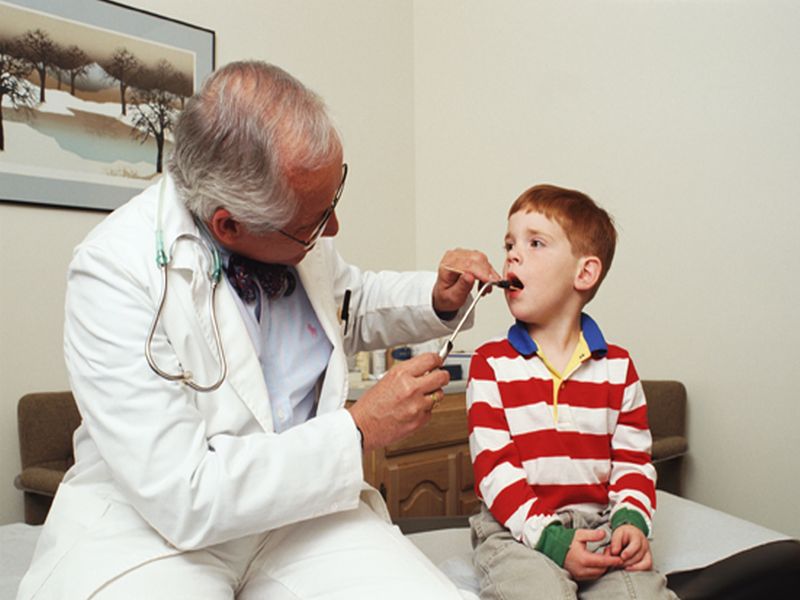
Ingredient in products called 'stone' can dangerously alter heart rhythm, city health officials say

Small study finds drug might be safe for patients who had previous reaction to the antibiotic